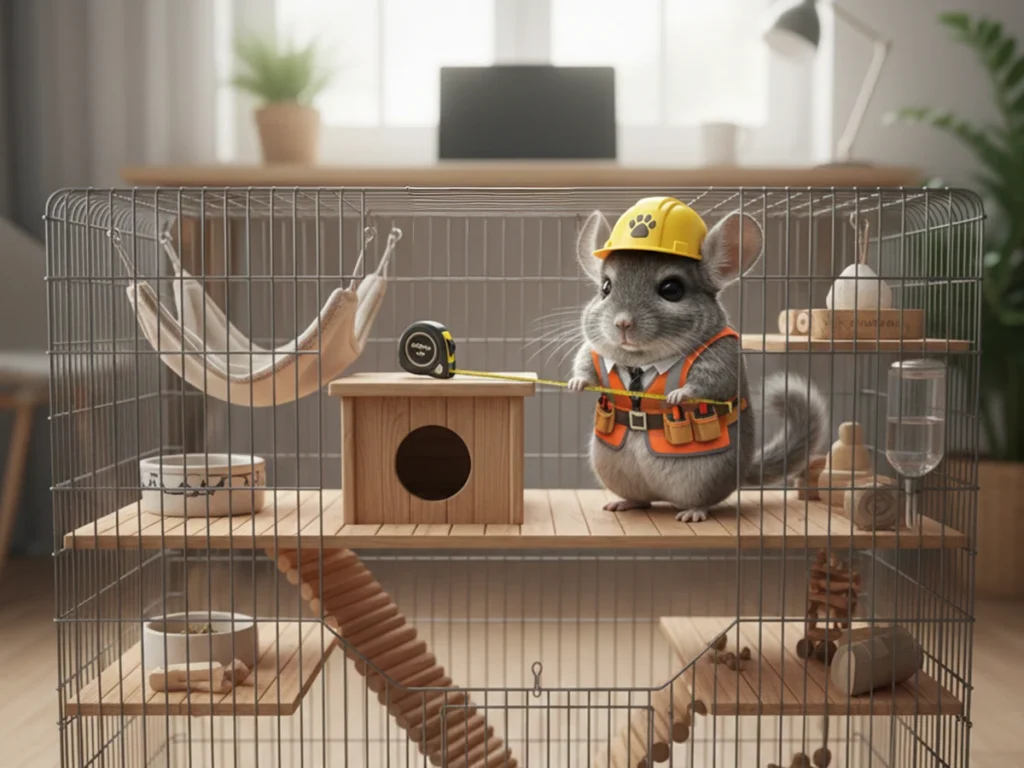
Chinchillas are active, agile animals that naturally move by jumping and climbing rather than walking. A well-designed cage setup is essential for their physical health, mental stimulation, and overall sense of security. Below is a practical guide to creating a safe, comfortable, and chinchilla-friendly living space.
Vertical Space Matters
A chinchilla cage should always prioritize height over width. Chinchillas love to jump between levels, and vertical movement is a natural part of their daily activity. Multi-level cages allow them to exercise properly and prevent boredom, which is especially important for indoor pets.
Wooden platforms and safe climbing
Wooden ledges and platforms are an essential part of any chinchilla cage. They allow your pet to jump, rest, and observe their surroundings from different heights. Plastic shelves should be avoided, as chinchillas often chew on them and may ingest harmful materials. Platforms placed at varying heights help create a dynamic and enriching environment.
Solid wooden ledges made from untreated wood are the safest option and also double as a natural chewing surface.
Hideouts and Safe Spaces
Every chinchilla needs a place to hide, rest, and feel secure. Enclosed hideouts or houses provide a sense of safety and help reduce stress. These spaces work best when placed in the upper part of the cage, as chinchillas instinctively feel safer at higher levels.
A wooden house or a wooden tunnel offers a quiet retreat while remaining breathable and safe for chewing.
For extra comfort, the resting area can be lined with a soft mat, creating a cozy sleeping spot.
Hay, Food and Water Setup
Chinchillas need constant access to hay as part of their daily care. Using a hay rack made from wood or metal helps keep hay contained and the cage organized. Plastic hay racks should be avoided, as chewing plastic can be dangerous if pieces are ingested.
Food bowls are best made from ceramic or metal. Some chinchillas enjoy tipping or tossing bowls, and ceramic dishes may break if dropped. In such cases, a bowl that attaches securely to the cage can be a practical solution. Plastic bowls are best avoided.
Water bottles and holders should be securely attached and made from durable materials that are easy to clean.
The Cage Floor: Bedding or Liners
The bottom of the cage can be lined with traditional bedding or a reusable cage liner. Cage liners are especially useful for chinchillas with sensitivities or allergies, as they reduce exposure to dust. They are also highly recommended for pets recovering after surgery, when it is important to prevent dust from bedding from getting into wounds and causing irritation or infection. In addition, cage liners are easy to clean and reusable, making them a practical solution for everyday cage maintenance.
Exercise and Running Wheels
Chinchillas need daily exercise, and a running wheel can be a great enrichment tool when chosen correctly. The wheel must be at least 40 cm in diameter. Smaller wheels can force the spine into an unnatural curve and may cause long-term back problems.
Only wooden or solid metal wheels should be used. Mesh or wire wheels are dangerous, as paws and toes can get caught.
If more than one chinchilla lives in the same cage, a running wheel is not recommended. While one chinchilla is running, another may accidentally go underneath and get injured.
Hammocks and Hanging Accessories
Many chinchillas enjoy hammocks and hanging accessories as additional resting or lounging spots. When securely attached and made from safe materials, hammocks can add variety and comfort to the cage.
A fabric hammock can be added as optional enrichment, especially for chinchillas that do not chew on textiles.
A Note on Materials and Your Chinchilla’s Behavior
When choosing accessories for your chinchilla’s cage, it’s important to closely observe your pet’s behavior. Some chinchillas never chew on fabric, while others will actively destroy any textile they can reach. Because of this, textile accessories are not suitable for every chinchilla and should always be monitored. If you notice excessive chewing, fabric items should be removed to prevent ingestion and possible health issues.
The same care should be taken with wooden accessories. Untreated, natural wood is always the safest option, as chewing is a natural and necessary behavior for chinchillas. Whenever possible, plywood or composite wood should be avoided. These materials often contain glue and binding agents that may be toxic if ingested. Solid, untreated wood provides a safe chewing surface and helps maintain healthy teeth.
By observing your chinchilla’s habits and choosing materials carefully, you can create a cage environment that is not only aesthetically pleasing but also safe, enriching, and tailored to your individual pet.